Expert Insights from Dr. Ridhima Lakhani & Dr. Gaurav Bhardwaj at Skinwell Clinic
When people want glowing skin before a wedding, event, vacation, or festival, the first thing that usually comes to mind is getting a facial.
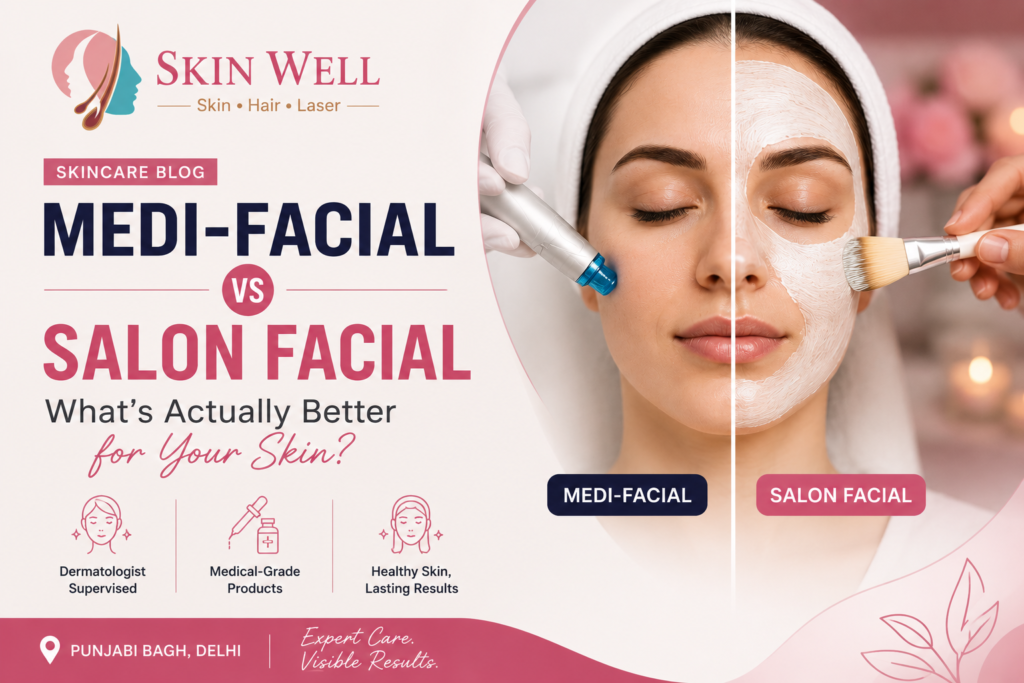
But today, there’s a growing confusion between salon facials and medi-facials.
Many patients visiting Skinwell Clinic often ask:
“Aren’t both basically the same thing?”
The answer is — not really.
While both treatments may temporarily improve the appearance of the skin, the approach, safety level, ingredients, technology, and long-term results are very different.
According to Dr. Ridhima Lakhani and Dr. Gaurav Bhardwaj, one of the biggest mistakes people make is choosing treatments based only on trends or instant glow promises without understanding what their skin actually needs.
In this article, we’ll explain:
- What a salon facial actually does
- What makes a medi-facial different
- Which one is safer for sensitive or acne-prone skin
- Why some facials damage the skin barrier
- Which treatment gives better long-term results
- Who should choose a medi-facial
What Is a Salon Facial?
A salon facial is usually designed for temporary cleansing, relaxation, and instant brightness.
Most salon facials involve:
- Cleansing
- Scrubbing
- Steam
- Extraction
- Massage
- Cream application
- Face packs
While these treatments may create a temporary glow, they are generally not customized according to deeper skin conditions.
In many cases, salon facials use:
- Fragranced products
- Heavy creams
- Aggressive scrubbing
- Strong bleaching agents
- Harsh extraction techniques
These may not suit every skin type.
At Skinwell Clinic, dermatologists frequently see patients experiencing:
- Redness
- Breakouts
- Irritation
- Allergic reactions
- Skin sensitivity
- Acne flare-ups
after unsuitable salon treatments.
What Is a Medi-Facial?
A medi-facial (medical facial) is a dermatologist-supervised skin treatment designed to improve skin health instead of just creating temporary surface glow.
Unlike salon facials, medi-facials are customized according to:
- Skin type
- Sensitivity level
- Acne condition
- Pigmentation
- Hydration levels
- Ageing concerns
- Skin barrier health
At Skinwell Clinic, medi-facials are carefully selected after analyzing the patient’s skin concerns and goals.
The treatment may include:
- Medical-grade products
- Advanced hydration technology
- Deep cleansing
- Gentle exfoliation
- LED therapy
- Oxygen infusion
- Skin barrier repair treatments
- Anti-inflammatory ingredients
The focus is not just beauty — it’s healthier skin function.
The Biggest Difference: Surface Glow vs Skin Health
This is the most important difference people should understand.
Salon Facial
Usually focuses on:
- Instant brightness
- Relaxation
- Temporary glow
Medi-Facial
Focuses on:
- Long-term skin improvement
- Skin barrier repair
- Hydration balance
- Acne management
- Pigmentation control
- Safe exfoliation
- Healthy skin maintenance
According to Dr. Gaurav Bhardwaj, healthy skin is not about making the skin look polished for one day — it’s about improving the skin’s overall condition safely over time.
Why Some Salon Facials Can Damage Sensitive Skin
Many salon treatments are not designed for medically sensitive skin.
People with:
- Acne
- Rosacea
- Pigmentation
- Active inflammation
- Sensitive skin
- Damaged skin barrier
may react badly to harsh facials.
Common problems dermatologists observe include:
- Over-exfoliation
- Skin thinning
- Broken capillaries
- Increased sensitivity
- Post-facial breakouts
- Irritation due to fragrance or bleach
At Skinwell Clinic, doctors often advise patients to avoid aggressive scrubbing or random treatments if the skin is already inflamed.
Is Medi-Facial Better for Acne-Prone Skin?
In many cases — yes.
Acne-prone skin needs controlled, non-irritating treatments.
Regular salon facials may:
- Spread bacteria
- Trigger inflammation
- Irritate active acne
- Increase redness
On the other hand, dermatologist-guided medi-facials are usually designed to:
- Calm inflammation
- Reduce oil congestion
- Support skin healing
- Improve hydration
- Strengthen the skin barrier
Some acne-focused medi-facials may also help reduce:
- Acne marks
- Dullness
- Mild pigmentation
- Excess oiliness
without damaging the skin.
What About Bridal Glow Treatments?
This is another common concern.
Before weddings or important events, many people choose repeated salon clean-ups and facials hoping for brighter skin.
Unfortunately, overdoing treatments close to important events can sometimes worsen the skin.
At Skinwell Clinic, dermatologists usually recommend starting skin preparation early instead of depending on last-minute facials.
Professional medi-facial plans may help improve:
- Skin texture
- Hydration
- Radiance
- Makeup finish
- Skin smoothness
in a safer and more controlled way.
Are Medi-Facials Painful?
No.
Most medi-facials are designed to be gentle and relaxing.
Unlike aggressive extraction-heavy facials, medical facials usually prioritize:
- Controlled treatment
- Minimal irritation
- Skin comfort
- Barrier protection
Many patients describe the experience as calming while still seeing healthier skin improvements over time.
How Often Should You Get a Medi-Facial?
This depends on your skin condition.
Some people may benefit from monthly sessions, while others only require occasional maintenance treatments.
Factors that matter include:
- Acne severity
- Skin sensitivity
- Pollution exposure
- Lifestyle
- Pigmentation concerns
- Hydration levels
At Skinwell Clinic, treatment frequency is usually personalized instead of following a fixed package approach.
Real Dermatology Insight from Skinwell Clinic
According to Dr. Ridhima Lakhani, one of the biggest misconceptions people have is assuming all facials are harmless.
In reality, repeated harsh treatments can slowly damage the skin barrier over time.
Dr. Gaurav Bhardwaj also explains that healthy glowing skin usually comes from:
- Consistency
- Proper skincare
- Hydration
- Medical guidance
- Barrier-friendly treatments
—not from aggressive temporary procedures.
So, Which One Is Actually Better?
The answer depends on your skin goals.
A salon facial may be suitable if:
- You only want temporary relaxation
- Your skin is not sensitive
- You don’t have active acne or inflammation
A medi-facial may be better if:
- Your skin is acne-prone
- You have sensitivity issues
- You struggle with pigmentation
- You want long-term skin improvement
- You want dermatologist-supervised treatment
- You care about skin health, not just instant glow
Final Thoughts
Not every glowing skin treatment is actually healthy for the skin.
While salon facials may offer temporary brightness, they are often not personalized for medically sensitive skin concerns.
Medi-facials, on the other hand, focus on improving skin health in a safer, dermatologist-guided way.
At Skinwell Clinic, treatments are designed according to the patient’s skin condition rather than following one standard routine for everyone.
Healthy skin is usually built gradually through proper care, consistency, and treatments that respect the skin barrier — not damage it.
FAQs
Is a medi-facial safe for sensitive skin?
Yes. Medi-facials are usually customized according to skin sensitivity and are often safer than harsh salon treatments.
Can salon facials cause acne?
In some cases, yes. Aggressive products or improper extraction may trigger breakouts or irritation.
How is a medi-facial different from a regular facial?
Medi-facials use medical-grade products and dermatologist-supervised techniques focused on skin health instead of only temporary glow.
Are medi-facials worth it?
For people with acne, pigmentation, sensitivity, or long-term skincare goals, medi-facials are often more beneficial.
How long do medi-facial results last?
Results vary depending on skin condition and aftercare, but consistent treatments generally support healthier long-term skin quality.