Expert Insights from Dr. Ridhima Lakhani & Dr. Gaurav Bhardwaj at Skinwell Clinic
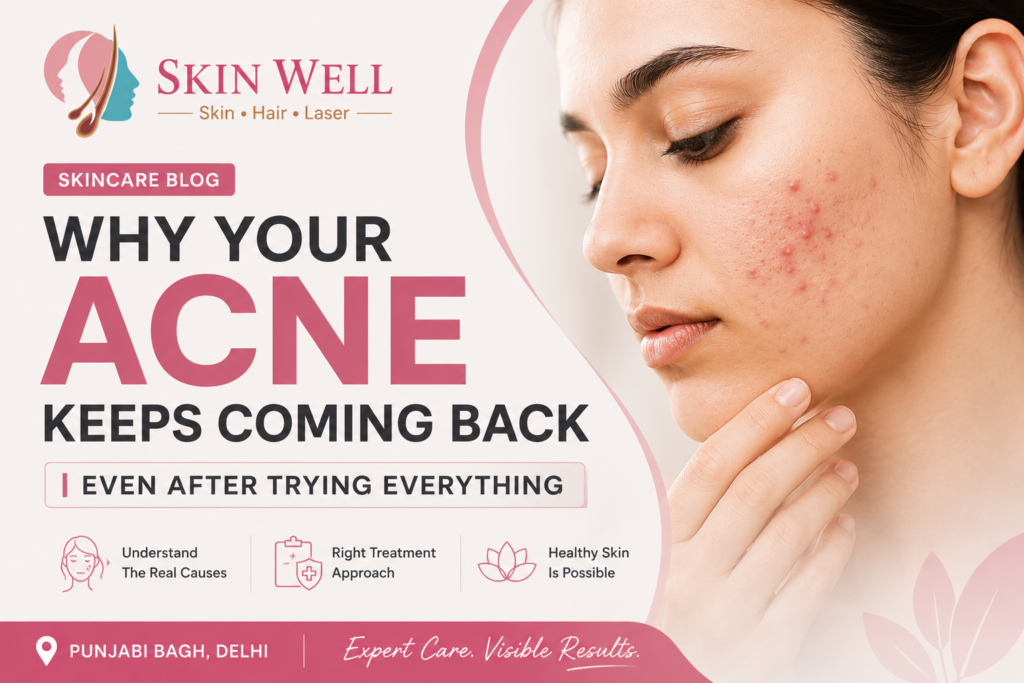
Acne is one of the most frustrating skin concerns because it rarely affects just the skin.
It affects confidence, social interactions, self-esteem, and in many cases, mental health too.
One of the most common things patients say during consultations at Skinwell Clinic is:
“I’ve already tried everything — expensive skincare, home remedies, facials, online products, even medicines — but my acne still comes back.”
And honestly, this is more common than people think.
In many cases, recurring acne is not caused by “dirty skin” or simply using the wrong face wash. The real reason is often much deeper — hormonal imbalance, skin barrier damage, stress, incorrect skincare routines, untreated inflammation, or even years of self-medication.
According to Dr. Ridhima Lakhani and Dr. Gaurav Bhardwaj at Skinwell Clinic, acne treatment works best when the root cause is properly identified instead of just temporarily drying out pimples.
In this article, we’ll explain:
- Why acne keeps returning
- Common skincare mistakes people make unknowingly
- The difference between hormonal acne and regular breakouts
- Why social media skincare advice often fails
- Treatments that actually help long-term
- When it’s time to see a dermatologist
Understanding Acne: It’s More Than Just Pimples
Acne develops when pores become clogged with oil, dead skin cells, bacteria, and inflammation.
But not all acne behaves the same way.
Some people experience occasional breakouts due to weather or diet, while others struggle with painful recurring acne for years.
At Skinwell Clinic, many patients who come for treatment have already tried:
- DIY remedies
- Internet skincare trends
- Random active ingredients
- Steroid creams
- Salon treatments
- Home facials
- Harsh scrubs
- Unprescribed medications
Unfortunately, these temporary fixes often worsen inflammation instead of treating the real cause.
1. Hormonal Acne Is Often the Real Problem
One of the biggest reasons acne keeps coming back is hormonal imbalance.
Hormonal acne usually appears around:
- Jawline
- Chin
- Lower cheeks
- Neck area
It tends to become worse:
- Before periods
- During stress
- Due to PCOS
- Because of irregular sleep
- Due to poor lifestyle habits
Unlike regular pimples, hormonal acne is often deeper, painful, and recurring.
Dr. Ridhima Lakhani explains that many patients keep changing skincare products without realizing their acne is internally triggered.
In such cases, only topical creams may not be enough.
The treatment may require:
- Medical skincare
- Hormonal evaluation
- Anti-inflammatory treatment
- Lifestyle correction
- Professional acne management
2. Overusing Active Ingredients Can Damage Your Skin Barrier
Today, skincare information is everywhere.
But the problem is that many people combine multiple active ingredients without understanding how skin actually works.
At Skinwell Clinic, doctors frequently see patients using:
- Salicylic acid
- Retinol
- Niacinamide
- Benzoyl peroxide
- AHAs/BHAs
- Vitamin C
—all together.
This often damages the skin barrier.
When the barrier becomes weak, the skin becomes:
- Red
- Sensitive
- Inflamed
- Dehydrated
- More acne-prone
Ironically, many people think their acne is getting worse because they “need stronger products,” when in reality, their skin needs recovery.
According to Dr. Gaurav Bhardwaj, healthy skin treatment is not about using the maximum number of products — it’s about using the right treatment consistently and safely.
3. Social Media Skincare Trends Don’t Work for Everyone
One of the biggest mistakes people make today is blindly following viral skincare trends.
What works for one influencer may completely damage another person’s skin.
Common examples include:
- Lemon on acne
- Toothpaste on pimples
- DIY scrubs
- Excessive exfoliation
- Steroid cream misuse
- Overnight “miracle” hacks
At Skinwell Clinic, many patients come after experiencing:
- Skin burns
- Pigmentation
- Severe breakouts
- Steroid acne
- Skin thinning
- Sensitivity reactions
This is why professional diagnosis matters.
Acne treatment should always depend on:
- Skin type
- Acne severity
- Hormonal condition
- Sensitivity level
- Existing scars
- Lifestyle factors
There is no universal skincare routine that works for everyone.
4. Stress and Lifestyle Affect Acne More Than People Realize
Many people underestimate the relationship between stress and skin.
But dermatologists regularly observe acne flare-ups during:
- Exam stress
- Work pressure
- Sleep deprivation
- Emotional stress
- Irregular eating habits
Stress increases cortisol levels, which can trigger excess oil production and inflammation.
Similarly, poor lifestyle habits may worsen acne significantly.
Some common triggers include:
- Sleeping late regularly
- High sugar intake
- Smoking
- Excess dairy in sensitive individuals
- Poor hydration
- Lack of exercise
At Skinwell Clinic, doctors often guide patients on both skincare and lifestyle correction because long-term skin health requires a holistic approach.
5. Acne Scars Become Harder to Treat If Acne Is Ignored
One major mistake people make is waiting too long before seeking treatment.
Many patients think:
“It will go away on its own.”
Sometimes it does.
But persistent inflammation can leave behind:
- Acne marks
- Pigmentation
- Deep scars
- Enlarged pores
- Uneven texture
Once scarring develops, treatment becomes more complicated.
This is why early intervention matters.
Professional acne treatment may include:
- Medical-grade skincare
- Chemical peels
- Acne facials
- Oral medication
- Laser treatment
- Scar management procedures
- Oil-control therapies
The earlier acne is controlled, the easier it is to prevent long-term skin damage.
Treatments That Actually Help Long-Term Acne
At Skinwell Clinic, treatment plans are customized because every patient’s skin behaves differently.
Depending on the condition, dermatologists may recommend:
Medical Acne Treatment
Prescription-based treatment helps control active inflammation safely.
Chemical Peels
These help reduce:
- Acne marks
- Oiliness
- Congestion
- Mild pigmentation
Laser & Acne Scar Treatments
For patients dealing with acne scars and texture damage.
Medi-Facials for Acne-Prone Skin
Unlike salon facials, dermatologist-supervised treatments focus on skin health instead of temporary glow.
Skincare Routine Correction
Sometimes simplifying skincare itself improves the skin dramatically.
When Should You See a Dermatologist?
You should consider professional consultation if:
- Acne keeps returning repeatedly
- Pimples are painful or cystic
- You already have acne scars
- Over-the-counter products are not helping
- Skin becomes irritated after skincare
- Acne affects your confidence or mental health
Early treatment not only improves the skin faster but also prevents permanent scarring.
Expert Advice from Skinwell Clinic
According to Dr. Ridhima Lakhani and Dr. Gaurav Bhardwaj, one of the biggest misconceptions about acne is that people expect instant results.
Real acne treatment requires:
- Consistency
- Correct diagnosis
- Patience
- Professional guidance
Healthy skin is usually built gradually — not overnight.
The goal is not just temporary pimple reduction.
The real goal is long-term skin stability and healthier skin function.
Final Thoughts
If your acne keeps returning despite trying multiple products, treatments, or home remedies, the issue may not be your effort — it may be the lack of proper diagnosis.
Acne is a medical skin condition, and in many cases, treating it correctly requires understanding the deeper causes behind the breakouts.
Instead of experimenting endlessly with trends and random products, seeking professional guidance early can save both time and long-term skin damage.
At Skinwell Clinic, treatment approaches are designed around understanding the patient’s skin, lifestyle, and underlying concerns instead of offering one-size-fits-all solutions.
FAQs
Why does my acne keep coming back?
Recurring acne is often caused by hormonal imbalance, stress, incorrect skincare routines, damaged skin barrier, or untreated inflammation.
Can stress really cause acne?
Yes. Stress increases cortisol levels, which may increase oil production and worsen inflammation in acne-prone skin.
Is hormonal acne different from normal acne?
Yes. Hormonal acne is usually deeper, painful, and appears around the jawline or chin area.
Do salon facials help acne?
Not always. Some salon facials may irritate acne-prone skin. Dermatologist-supervised treatments are generally safer for active acne.
Can acne scars be treated?
Yes. Depending on the severity, acne scars may improve with laser treatments, chemical peels, and professional dermatology procedures.